The Real Cost of Going All In: What Nobody Tells You Before You Make the Creative Leap

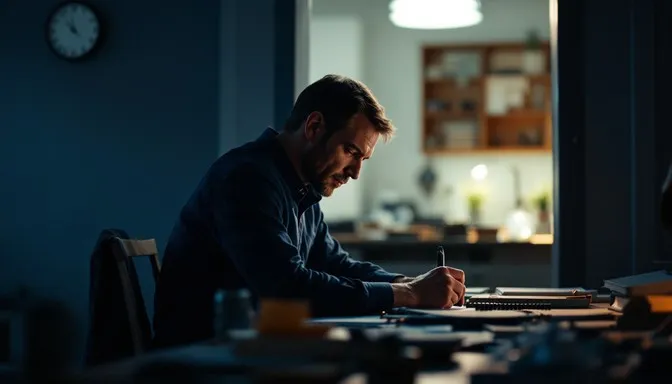
Photo: creative entrepreneur planning finances notebook coffee shop, via img.freepik.com
Let's say you've been writing nights and weekends for three years. Or recording songs in your spare bedroom. Or building a body of visual work while your actual job quietly drains the life out of you. And now you're thinking about it — really thinking about it. The full commitment. The leap.
Everybody has an opinion about what you should do. The internet will give you inspirational quotes about burning your ships. Your mom will suggest you keep the health insurance. Your most successful creative friend will say it was the best decision they ever made, conveniently leaving out the two years they ate ramen and quietly borrowed money from their partner.
I want to give you something more useful than inspiration or caution. I want to give you the actual architecture of what this decision looks like — financially, psychologically, and professionally — so you can assess it clearly instead of either talking yourself into it or out of it based on feelings alone.
The Numbers First (Because Ignoring Them Doesn't Make Them Go Away)
Most creative people who are considering the leap dramatically underestimate their monthly expenses and dramatically overestimate their near-term earning potential. Both errors are understandable. Neither is survivable for long.
Before anything else, you need a real number: what does it actually cost you to exist for one month? Not the idealized version where you've cut everything. The real version, including the streaming services you'll keep, the coffee you'll still buy, the car payment, the student loans, the occasional dinner out because you're a human being. Add health insurance — in the US, if you're coming off an employer plan, this alone can run $400 to $600 a month for a single person on a mid-tier marketplace plan.
Now look at your creative income. Not what you hope to earn. What you've actually earned in the last twelve months from your work. If that number is zero or close to it, that's not a dealbreaker — but it is important data. It means your first year of full-time creative work is also your first year of building a revenue model from scratch, which is a second job layered on top of the creative work itself.
The general advice you'll hear is to have six months of living expenses saved before you make the leap. That's a reasonable floor. A year is better. The reason isn't pessimism — it's that creative income is almost never linear. It comes in lumps and gaps, and the gaps have a way of arriving at the worst possible time.
The Psychological Weight You're Not Accounting For
Here's the part that doesn't show up in the spreadsheet: what happens to your creative work when it becomes your only source of income?
For some people, the pressure is clarifying. The stakes make them sharper, more focused. Necessity turns out to be the thing that was missing all along. But for a significant number of creative people — and I'd argue the majority — the transition from passion project to livelihood introduces a layer of anxiety that actively interferes with the work itself.
When your rent depends on the next commission, the next book sale, the next client saying yes, the creative decisions start to bend toward the commercial. Not necessarily in ways you'd consciously choose. It's subtler than that. You start second-guessing the weird idea because you can't afford for it not to work. You take the safer brief. You make the thing that sold last time instead of the thing that excites you.
This isn't weakness or selling out. It's a completely rational psychological response to financial stress. The question is whether you have enough structural support — savings, a part-time income stream, a partner's income, whatever it might be — to give yourself a buffer against that pressure during the early years.
Misconceptions About "Making It"
The popular image of creative success in America tends to skip the middle. You're either struggling in obscurity or you've made it — book deal, record contract, gallery show, viral moment. The actual territory most working creatives occupy is neither of those things. It's a patchwork. It's teaching workshops and licensing a few pieces and doing some commercial work and selling some original work and cobbling together something that functions as a living.
That patchwork is not failure. It's actually the norm for most successful independent creatives. But if you go in expecting the clean narrative — quit job, focus on art, get discovered — you're setting yourself up for a crisis of confidence when the reality turns out to be messier and slower.
The creatives who sustain themselves long-term tend to share a few characteristics. They're genuinely okay with the portfolio approach to income. They treat the business side of their work with the same seriousness as the creative side. And they've made peace with the fact that "making it" isn't a destination — it's an ongoing negotiation.
A Framework for Deciding When the Gamble Makes Sense
So how do you actually know? Here are the questions worth sitting with honestly:
Have you already proven some demand? Not virality, not compliments — actual transactions. People paying for your work, even in small amounts, is qualitatively different from people saying they love it.
Do you have a runway? Not "I'll figure it out" — a specific number of months you can sustain yourself without new income. The longer that runway, the more creative freedom you'll have while you build.
Is your current situation actually the obstacle? Sometimes the day job is the problem. But sometimes the day job is the excuse, and what's actually in the way is something internal that more time won't fix. Be honest about which one it is.
What does a bad outcome look like, and can you live with it? Not worst-case-scenario catastrophizing — a realistic bad outcome. If you try this for two years and it doesn't generate enough income to continue, what does your life look like? If the answer is "I could go back to what I was doing" or "I'd have two years of serious creative work I'm proud of," that's very different from "I'd be financially devastated with no path back."
The leap is real. For some people, at some moments, it's the right call. But it's a decision that deserves the same rigor you'd bring to anything else that actually matters — which is to say, clear eyes, honest numbers, and a plan that accounts for the reality that creative work is slow, nonlinear, and worth doing anyway.