Dead Letters: The Secret Life of Your Unfinished Work
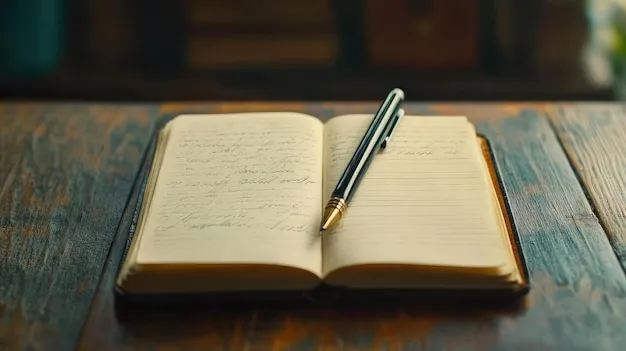
Photo: open vintage notebook with handwritten notes and pen on wooden desk, via img.freepik.com
Somewhere on your hard drive — or maybe in a spiral notebook shoved under your bed — there's a graveyard. A collection of half-written songs, scenes that lost momentum around page twelve, sketches that made total sense at two in the morning and absolutely none at noon. Most of us treat this archive like evidence of our shortcomings. We scroll past it fast, the way you avoid eye contact with an ex.
Here's the thing: that graveyard might be the most valuable real estate you own.
Why We Abandon Things (And Why That's Not the Problem)
When a project stalls, the instinct is to diagnose it as broken. The idea wasn't good enough. The execution was off. You weren't ready. And sometimes, sure, that's true. But more often, abandonment is just a timing problem dressed up as a talent problem.
Creative work doesn't always arrive fully formed. Sometimes a song is missing its emotional center because you haven't lived the experience that would give it one yet. A script might be stuck in act two because you don't actually know what your protagonist wants — and you won't figure that out until some version of that conflict plays out in your own life. The draft didn't fail. It just ran out ahead of you.
This is the thing about unfinished work that nobody really talks about: it preserves a version of your instincts before the second-guessing sets in. There's a rawness to an abandoned draft that a polished, completed piece often loses. You were reaching for something real when you started it. That reaching is still in there.
The Time Capsule Effect
Revisiting old work after months — or years — is a fundamentally different experience than picking it back up the next day. Distance does something interesting to the creative brain. It strips away the anxiety of making and replaces it with something closer to reading. You become a collaborator to your past self rather than a critic.
I've come back to a half-finished piece and immediately heard exactly what it needed — a key change, a different narrator, a scene cut — when six months earlier I'd been completely blind to the solution. The problem hadn't changed. I had. New experiences, new influences, new technical skills all add up to a version of you that's better equipped to finish what an earlier version started.
Think of your archive as a time capsule with a practical purpose. Past-you was planting seeds. Present-you gets to decide which ones are worth watering.
How to Actually Mine Your Archive (Without Drowning in It)
The biggest obstacle to using your unfinished work isn't motivation — it's organization. If your drafts are scattered across three apps, two notebooks, and a folder on a laptop you're not sure still charges, the archive feels like a burden instead of a resource. Fix that first.
Do a single dedicated audit. Block off a few hours and do nothing but collect. Drag everything into one place — one folder, one notes app, one physical notebook. Don't judge anything during this phase. You're just taking inventory.
Tag by emotional tone, not by form. Instead of sorting by "songs" or "scripts" or "poems," try labeling things by what they were reaching for emotionally. Grief. Anger. Nostalgia. Defiance. This makes it dramatically easier to find material when you're working on something with a specific emotional core.
Schedule archive sessions separately from new work sessions. Mixing them is a recipe for distraction and self-judgment. Set aside specific time to revisit old material — maybe once a month — and treat it like a different creative mode entirely. You're excavating, not building.
Lower the bar for what counts as useful. A single line from an abandoned song can be the spine of a new one. A character description you wrote in a dead script might be exactly the voice you need for something current. You're not looking for complete, transferable chunks. You're looking for sparks.
Perfectionism's Favorite Lie
Perfectionism loves the blank page. It tells you that starting fresh means starting clean — that the new idea is purer, more promising, unburdened by the mess of what came before. It's a convincing story. It also keeps a lot of genuinely good work buried.
The obsession with starting over is, in a lot of ways, an avoidance strategy. A new project doesn't come with the evidence of your previous struggles baked in. But your archive does — and that evidence is useful. It shows you where you consistently get stuck. It shows you what kinds of ideas tend to stall for you and why. It's a map of your creative habits, the productive ones and the self-defeating ones alike.
Finishing something that once felt impossible is also, genuinely, one of the better feelings this work has to offer. There's a specific satisfaction in returning to a piece you'd written off and discovering it was never actually broken — just waiting.
The Draft Isn't Dead. It's Dormant.
Every working artist I've ever respected has some version of this practice, even if they don't call it that. They go back. They dig. They treat their own history as a collaborator rather than a liability.
Your unfinished work isn't a ledger of everything you couldn't do. It's a record of everything you were willing to attempt. That's worth something. Actually, depending on the day you decide to open the folder back up, it might be worth everything.
Stop treating your archive like a graveyard. Start treating it like a library.
The books are already written. Some of them just need a final chapter.